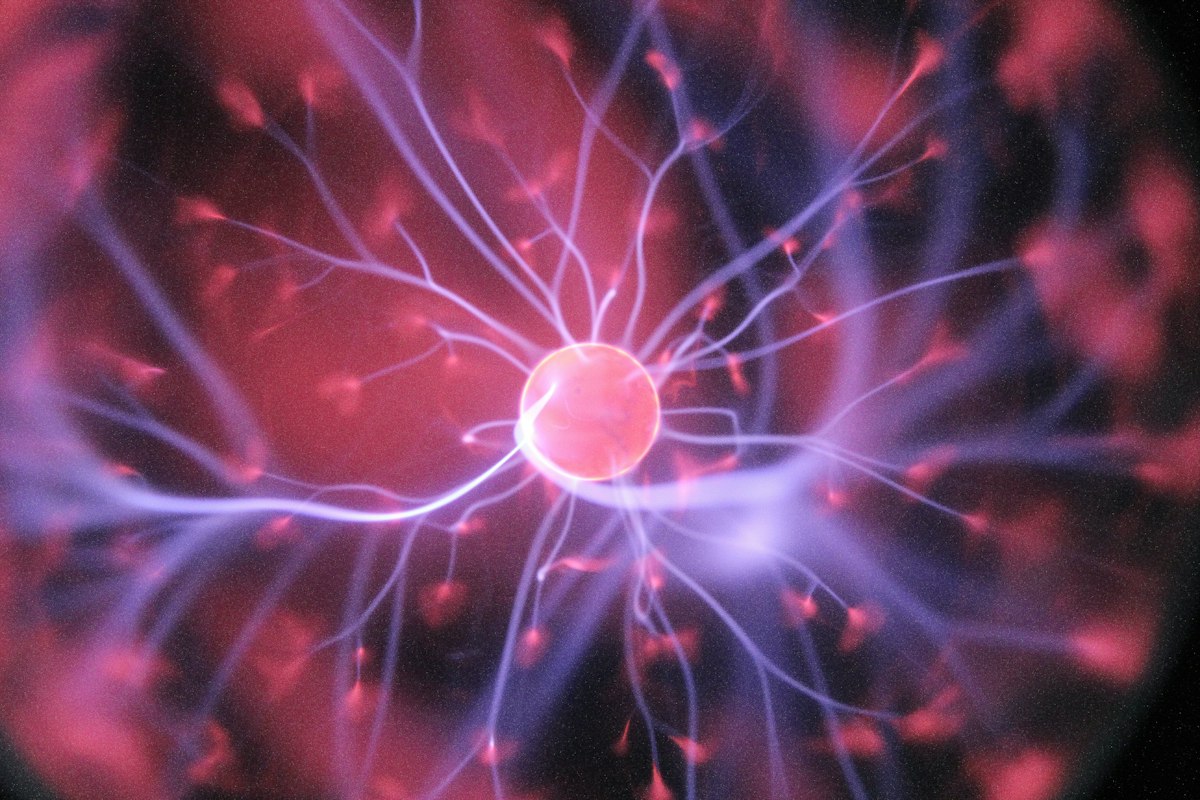
Explore the biology of behavior, genetics, and neuroscience in this 25-chapter series based on Robert Sapolsky’s Stanford lectures.
25 lessons · Read one a day
Day 1: The Categorical Mind
THE EVOLUTIONARY BLUEPRINT

Your brain loves boxes. But biology doesn’t care about your buckets. Human behavior is a continuum, not a checklist.
Take action: Notice when you label a behavior as ‘just’ genetic or ‘just’ learned. It is ALWAYS both.
Day 2: The Game of Survival
THE EVOLUTIONARY BLUEPRINT

Evolution is not about individuals; it’s about gene frequencies. Altruism is often just a calculated long-term investment.
Take action: Think about your ‘selfless’ acts. How many were driven by kin selection or reciprocity?
Day 3: Cooperation & Tit-for-Tat
THE EVOLUTIONARY BLUEPRINT

In a world of strangers, the most successful strategy is ‘Nice, Retaliatory, and Forgiving.’
Take action: Apply the tit-for-tat strategy to one difficult person in your life this week.
Day 4: The Molecular Alphabet
THE GENETIC CODE

Genes are NOT blueprints. They are ‘To-Do’ lists that can be edited by the environment.
Take action: Genes only tell you about potential. Your environment determines which genes are expressed.
Day 5: Epigenetics: The Soul’s Ghost
THE GENETIC CODE

Trauma and stress can leave marks on your DNA that last for generations. Your ancestors’ lives are written in your cells.
Take action: Acknowledge that some of your predispositions might be echoes from your family’s history.
Day 6: Heritability vs Certainty
THE GENETIC CODE

Saying a trait is 50% heritable does NOT mean you’re 50% destined to have it. It’s about population variance.
Take action: Stop thinking of genetics as destiny. It’s a set of statistical probabilities.
Day 7: The Interaction Effect
THE GENETIC CODE

A gene for depression might only matter if you live through a childhood trauma. The ‘G x E’ interaction is the key.
Take action: Focus on controlling your ‘E’ (Environment) to manage your ‘G’ (Genetics).
Day 8: Pattern Recognition
THE NEURAL ENGINE

Your brain is a prediction machine. It scans the environment to avoid surprises, often creating stories that aren’t there.
Take action: Identify one assumption you made today that was based on a pattern from your past.
Day 9: Neurons: The Messengers
THE NEURAL ENGINE

Every thought, every fear, every ‘soulful’ moment is just ions moving across a membrane. Matter becomes consciousness.
Take action: Visualize your willpower as literal electricity flowing through your neurons.
Day 10: The Space Between
THE NEURAL ENGINE

The synapse is where the magic happens. Neurotransmitters are the ink in which our experience is written.
Take action: Consider how your diet and sleep affect the chemical ink of your brain today.
Day 11: Neuroplasticity
THE NEURAL ENGINE

The brain is remarkably plastic until the day you die. You can physically prune and grow your own hardware.
Take action: Engage in one ‘new’ difficult cognitive activity today to trigger plasticity.
Day 12: The Hormonal Orchestra
THE NEURAL ENGINE

Hormones don’t CAUSE behaviors. They change how you perceive the world, making you more or less likely to act.
Take action: Observe how your stress levels (cortisol) change your interpretation of a simple comment.
Day 13: Testosterone Myths
THE NEURAL ENGINE

Testosterone doesn’t cause aggression; it magnifies whatever behavior is needed to maintain status.
Take action: In a ‘noble’ culture, testosterone would actually make you act more generously to gain status.
Day 14: Oxytocin: The Dark Side
THE NEURAL ENGINE

The ‘love hormone’ also makes you more xenophobic. It bonds the ‘Us’ and magnifies the hatred of ‘Them’.
Take action: Be wary of intense group bonding—it often comes at the expense of outsiders.
Day 15: The Seat of Emotion
THE LIMBIC MACHINE
The Limbic System is where we truly live. It’s the ancient brain that doesn’t care about logic or your career.
Take action: When you feel an ‘irrational’ fear, thank your limbic system for trying to keep you alive.
Day 16: Amygdala: The Alarm
THE LIMBIC MACHINE

The amygdala processes fear before you even know what you’re looking at. It’s faster than your vision.
Take action: Breathe. When triggered, your amygdala has a 2-second lead on your logic. Wait for the logic to catch up.
Day 17: Sexual Selection
THE LIMBIC MACHINE

Mating strategies across the animal kingdom explain why humans are ‘confused’ biparental species.
Take action: Realize that human society’s conflict between polygamy and monogamy is baked into our biology.
Day 18: Mate Choice Biology
THE LIMBIC MACHINE

We choose partners based on MHC diversity and facial symmetry—biological hacks for a healthy immune system.
Take action: Sometimes your ‘gut feeling’ about someone is just your immune system doing math.
Day 19: The Biology of Aggression
SOCIETY & SHADOWS

We don’t hate aggression; we hate the wrong kind of aggression. We celebrate it on the football field or the battlefield.
Take action: Reflect on which forms of violence you tolerate or even praise.
Day 20: War & Peace
SOCIETY & SHADOWS

Chimpanzees hunt and murder; Bonobos have sex to resolve conflict. Humans are the only ones who can do both in an hour.
Take action: Recognize that your capacity for both empathy and cruelty is equally ‘natural’.
Day 21: Chaos & Complexity
SOCIETY & SHADOWS

Complex systems are not just small systems with more parts. They have emergent properties that cannot be predicted.
Take action: Stop looking for single causes (like ‘the gene for X’). The truth is always an emergent network.
Day 22: Emergence
SOCIETY & SHADOWS

A colony of ants is smart; the individual ant is not. You are a colony of 30 trillion cells.
Take action: Respect the collective intelligence of your own body and your social tribe.
Day 23: The Language Instinct
SOCIETY & SHADOWS

Language is a biological adaptation that allows us to share our internal neural maps with others.
Take action: Words are literally tools for brain-to-brain synchronization. Use them carefully.
Day 24: The Schizophrenic Mind
SOCIETY & SHADOWS

Schizophrenia is not just ‘broken’ brain; it’s a window into the evolution of human imagination and religiosity.
Take action: The line between a shaman and a patient is often just a matter of cultural context.
Day 25: Individual Variation
SOCIETY & SHADOWS
The most robust finding in all of biology is variation. There is no ‘normal’. There is only a distribution.
Take action: Embrace the ‘outliers’ in your community. They are the engine of evolutionary adaptation.
Leave a Reply